

Exhibitions
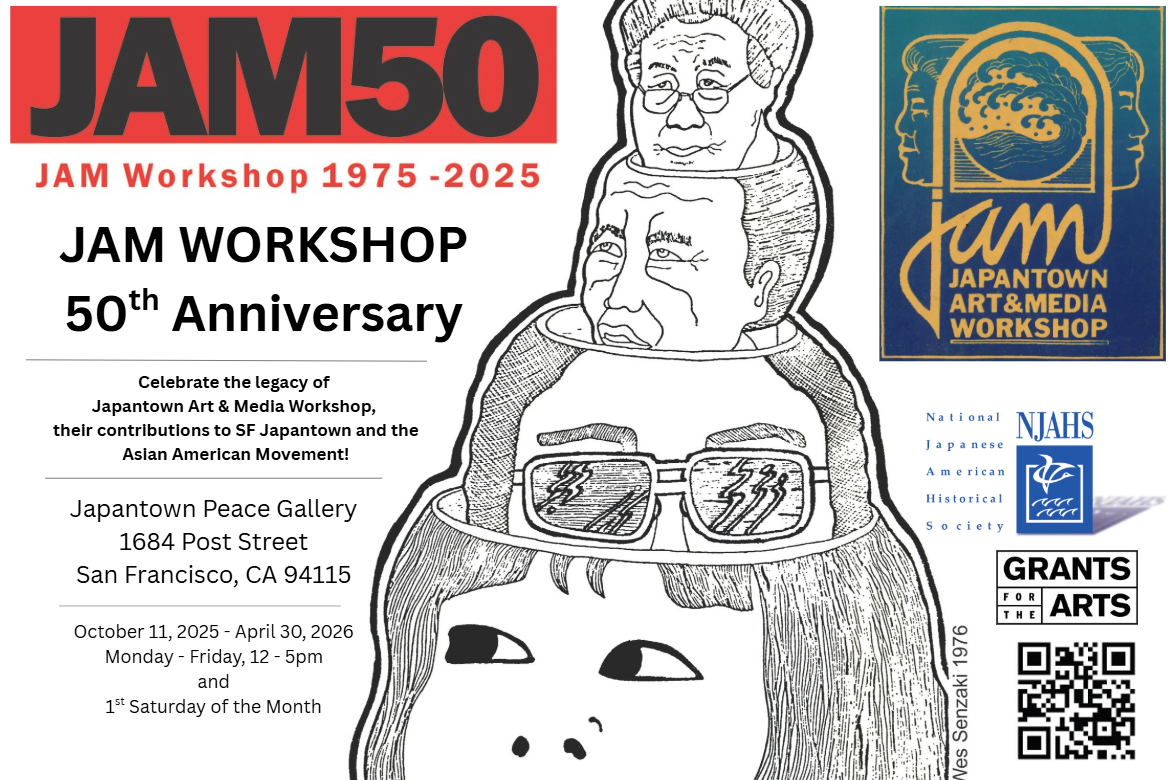
Japantown Art & Media Workshop 50th Anniversary Exhibit
In 1975, the JAM Workshop introduced an art concept fueled by a generation of artists seeking to use their art for social good. Simply entitled "community art," it welcomed everyone regardless of their ability to pay or their level of skills.
Featuring 56 historic posters from 1976 to 2000, hand-printed using traditional silkscreen methods, visualizing the history of Asian Americans during the final quarter of the 20th Century.
Contested Histories: Preserving and Sharing a Community Collection
During World War II, Japanese Americans incarcerated in America's concentration camps demonstrated their resilience, ingenuity, and creativity. In 2015, JANM was entrusted with the safekeeping of the Eaton Collection, an important collection of some 400 items made by Japanese American incarcerees.
Now the exhibition, enhanced with new findings, is on tour at NJAHS' MIS Historic Learning Center, where many of the recently restored artworks are on view for the first time.
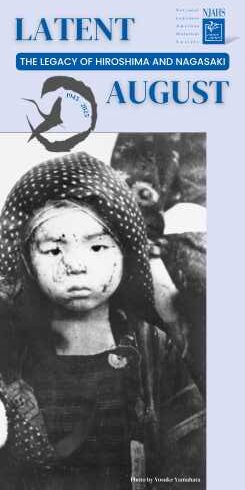
LATENT AUGUST: Legacy of Hiroshima & Nagasaki
As Japanese Americans, born and raised in America, we are positioned to see the atomic bombing from both vantage points. This exhibition brings all these perspectives into view and moves toward a greater understanding of nuclear warfare and its implications today.
TOPAZ COLLAGES: The Art of Jeanie Kashima
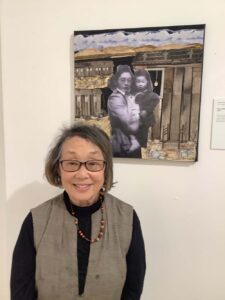
Eugenia "Jeanie" Kashima was the first baby born in Topaz (Central Utah) Concentration Camp, on September 22, 1942. Seventy-eight years later during the COVID epidemic, Jeanie revisited her birth via art.
In 2020, Jeanie enlarged family photo images and added them to her mixed media to create these collages, blending historic images with her artistic interpretation.
NOW & THEN: Life in Community Art
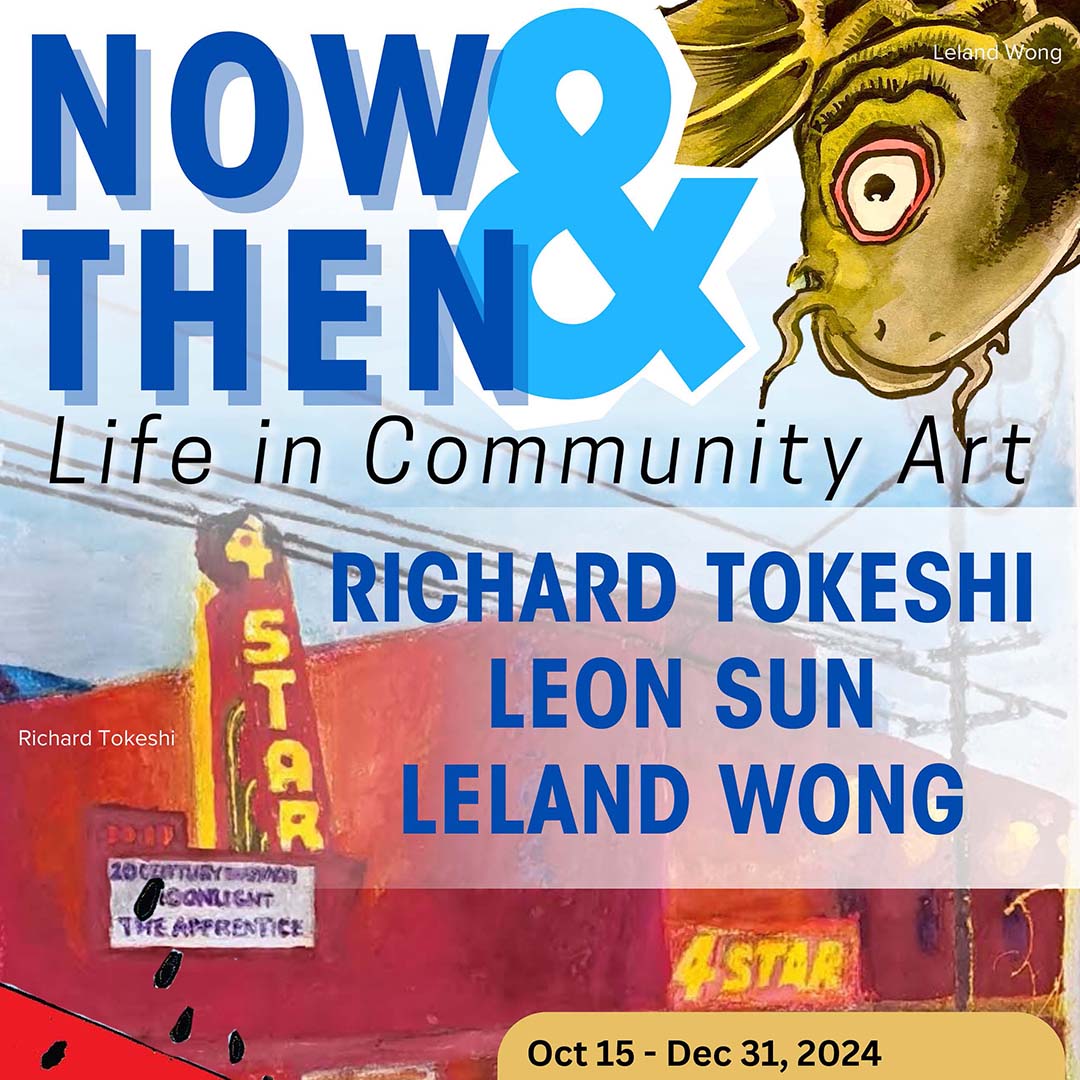
An exhibition exploring new works and old favorites of San Francisco Nihonmachi's Community Artists. Our time-honored artists herald their diverse cultural heritage, share their personal and spiritual journeys through life and celebrate a deep sense of community of now and then.
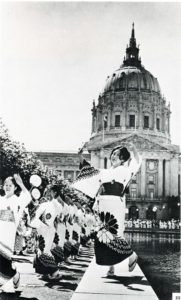
American Bon Odori: Dancing in Joy and Remembrance
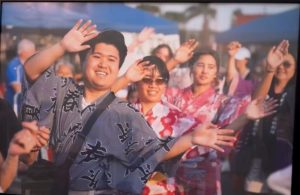
Commemorating the 125th anniversary of the Buddhist Churches of America. Vibrant, colorful, and joyous—Obon dancing (Bon odori) is a kaleidoscope of movement and rhythm, deeply rooted in Japanese Buddhist traditions.
Incorporating archival photos, rare pre-war and wartime film clips, and artifacts, chronicling the history and significance of Obon dancing in the continental United States from the 1930s through the 21st century.
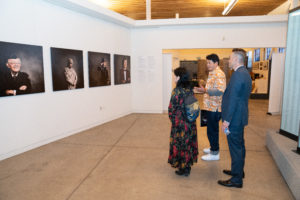
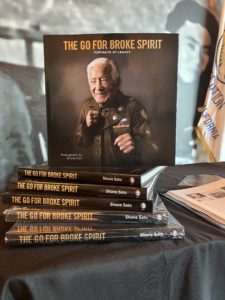
The Go For Broke Spirit
This exhibit explores the "untold" histories of the Nisei and Japanese American veterans of World War II and beyond. The series of portraits features veterans dressed in military uniforms similar to those they once donned during the war.
Each portrait captures what it might have been like fighting for a country that imprisoned their family and friends, the racism they endured for looking like the enemy, and their ultimate triumph.
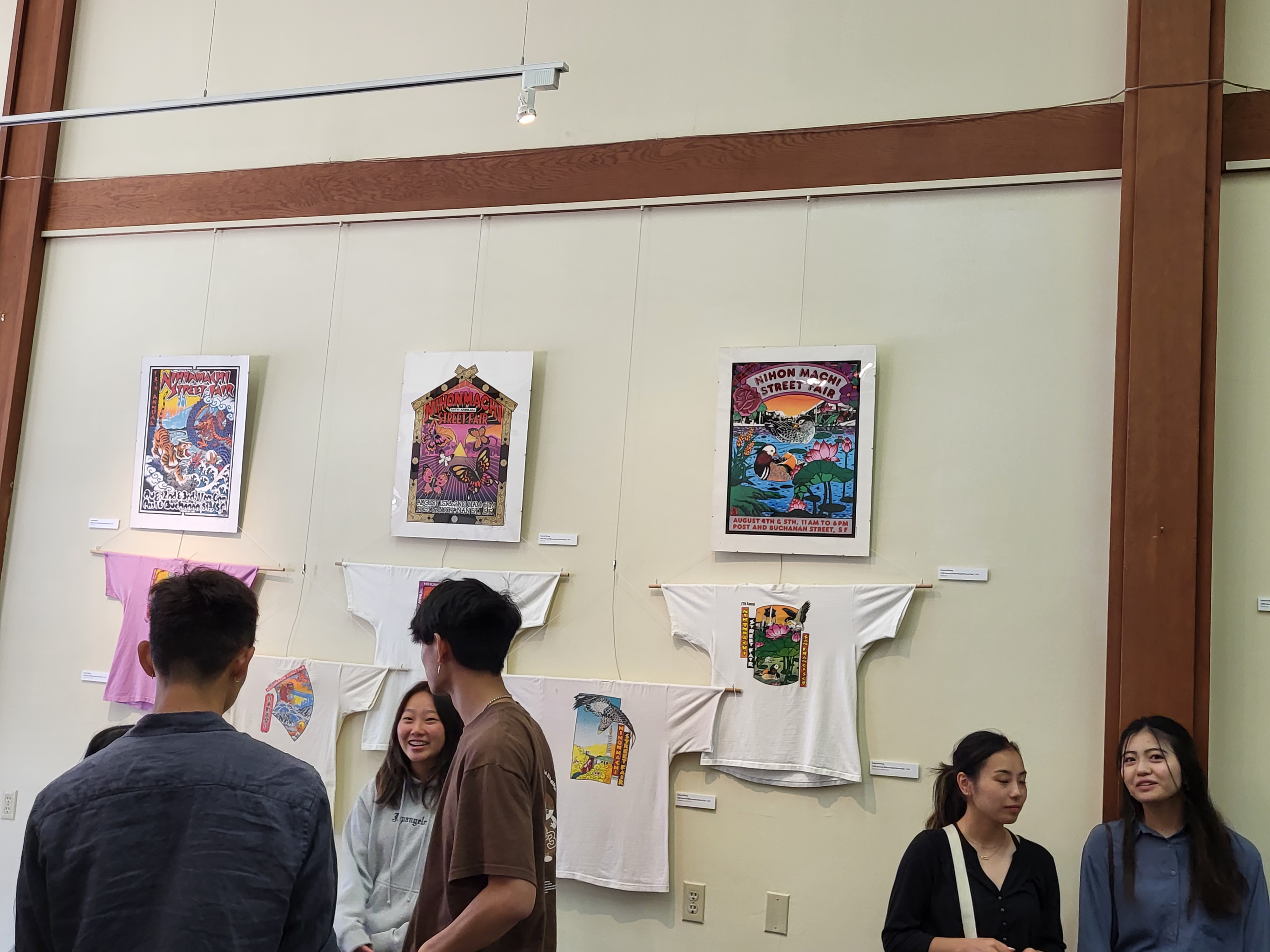
Nihonmachi Street Fair T-Shirts
The look of the Nihonmachi Street Fair from 1974 – 1998 was created by local community artist, Leland Wong. His concepts and vision for each poster design captured what was happening in our community and sometimes in the world.
These beautifully silk-screened posters were also a community effort where many Street Fair volunteers assembled in Leland's garage. Experience almost five decades of street fair history and memories.
Queer Reflections
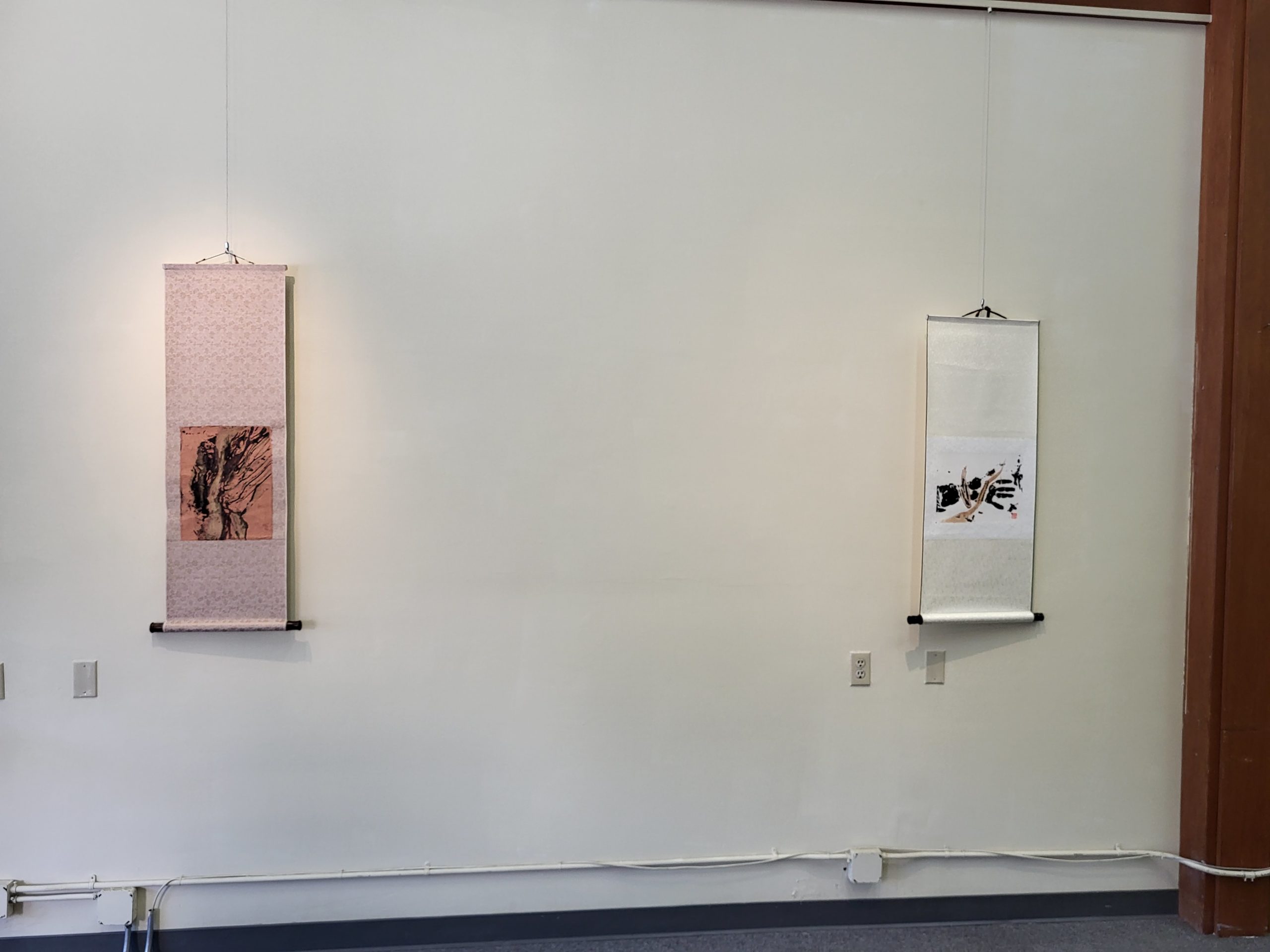
NJAHS invites visitors to examine how we see and remember. Queer Reflections asks about our memories, perceptions and what we see in ourselves and others.
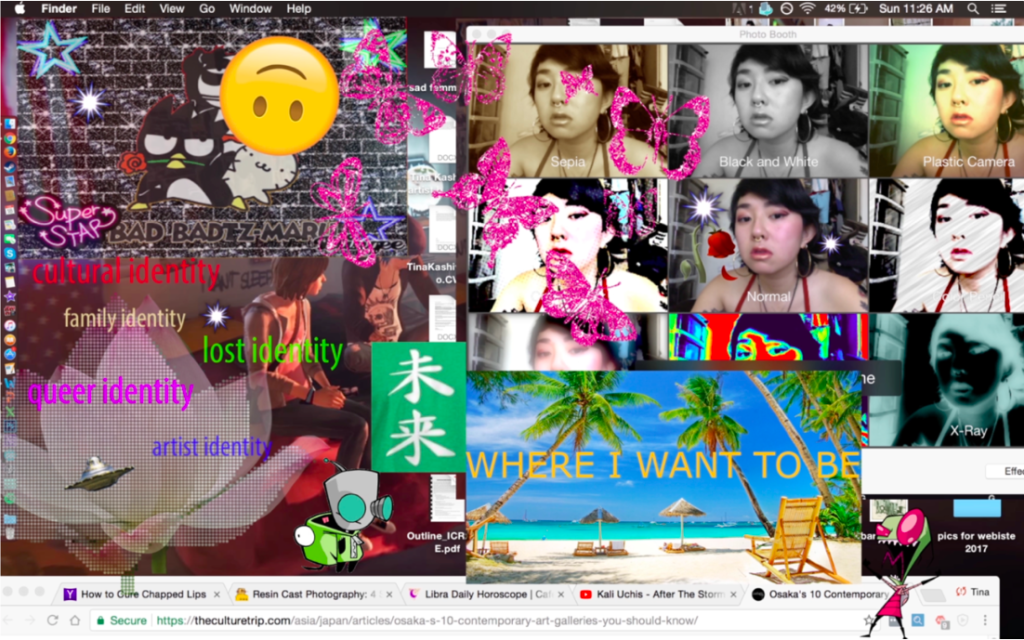
Two scrolls from Midori's Evoco Project are artifacts of memory. Tina Kashiwagi's "search for mt. fuji" renders abstract what is normally a cliched image of Japanese tourism culture.

Threads of Remembrance
NJAHS is pleased to host Threads of Remembrance; Asian American Quilts of Memory at the NJAHS Peace Gallery. Featuring quilts from the East Bay Nikkei Quilters, Donna Kotake, Jeanie Low and Carolyn Hayashida. Gallery is free and open to the public. Funded by San Francisco Grants for the Arts.
REDRESS, RECKONING & RECOVERY
On the 35th anniversary of the Civil Liberties Act of 1988, a digital exhibit and interactive reflection booth at the MIS Historic Learning Center.
Presented by the National Japanese American Historical Society, funded by a grant from the National Writing Project - National Endowment for the Humanities - A More Perfect Union.
Back to the Culture: A Silkscreen Print Exhibit
We are LGBT Nikkei!
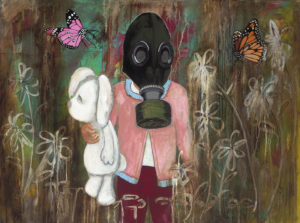
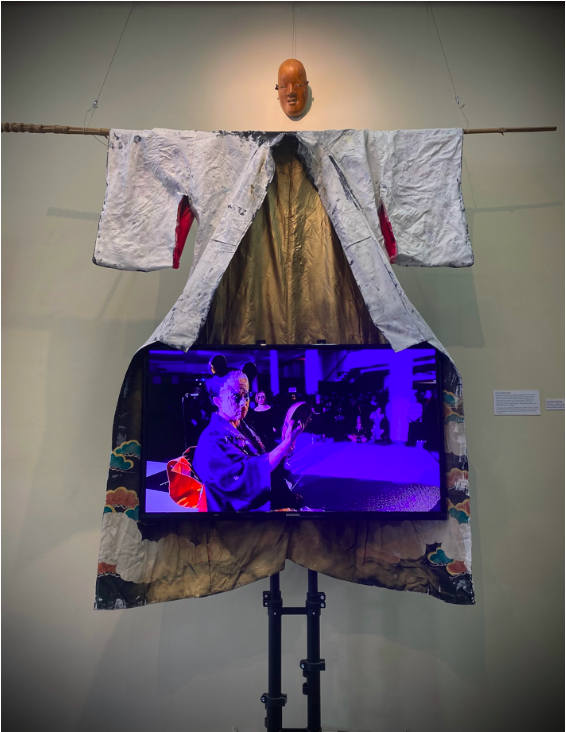
There have always been queer Japanese Americans. Since the earliest days of Japanese migration to the United States, there have been Japanese Americans who defy traditional gender and sexuality. Whether it be the poet Yone Noguchi or 1960s activist Kiyoshi Kuromiya, queer Japanese Americans have been among us.
This exhibition aims to radically give Nikkei space to queer Nikkei, sending a message that LGBTQ Nikkei are welcome and embraced within San Francisco's Japantown community.
Featured Artists: Julia LaChica, Midori, Tina Kashiwagi, Mia Nakano, Tomo Hirai
Oshogatsu Festival Posters
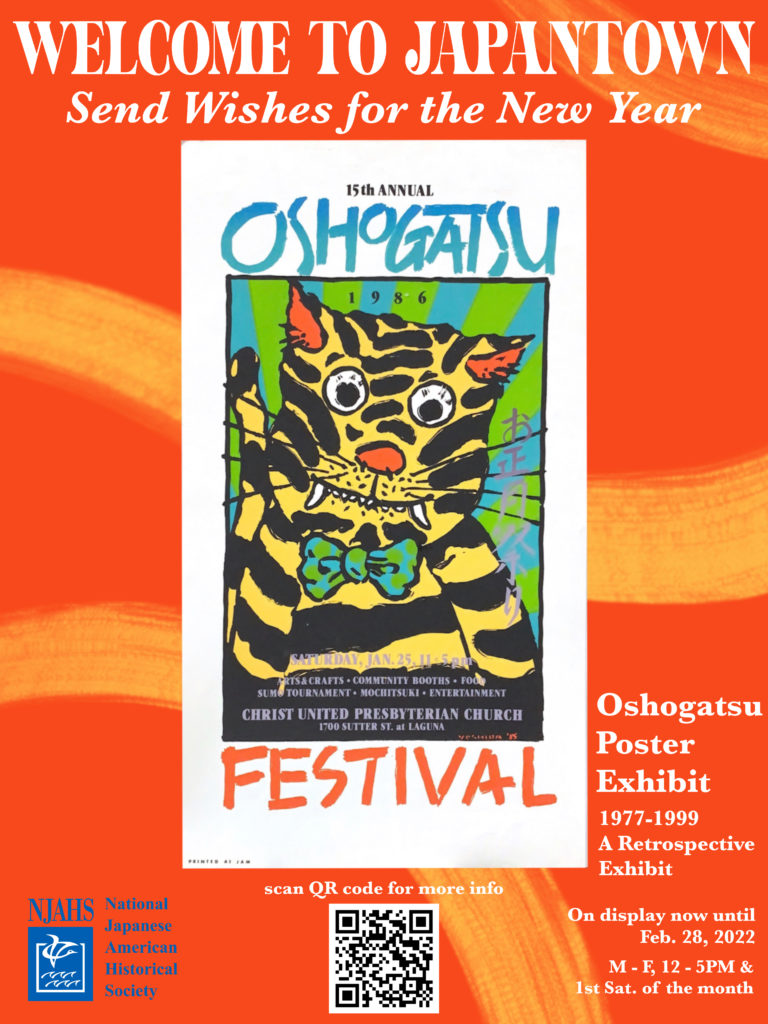
San Francisco's Japantown Art & Media (JAM) Workshop was a community art non-profit organization that operated from 1977 through 1999. Many of JAM's screen-printed posters were devoted to announcing Japanese community events, which included the annual Oshogatsu Festival.
Mochi is shown in many of these posters as it symbolizes the wish for a long life during Oshogatsu. Over the years as the Asian Zodiac cycles, a new animal is used as the primary theme. These colorful and bold screen-printed works of art express the innovative individual styles of their creators.
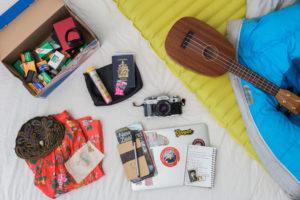
THE SUITCASE PROJECT
What would you pack if forcibly removed from your home today?
The Suitcase Project is a multimedia exhibition asking yonsei and gosei (fourth and fifth generation) Japanese Canadians and Americans what they would pack if uprooted from their homes in a moment's notice. Kayla Isomura's work examines how descendants of the internment and incarceration remain affected by this history today.
More than 80 subjects ranging in age and background share their stories from cities in British Columbia, Canada and Washington, US through a series of photographs, short films and interviews.
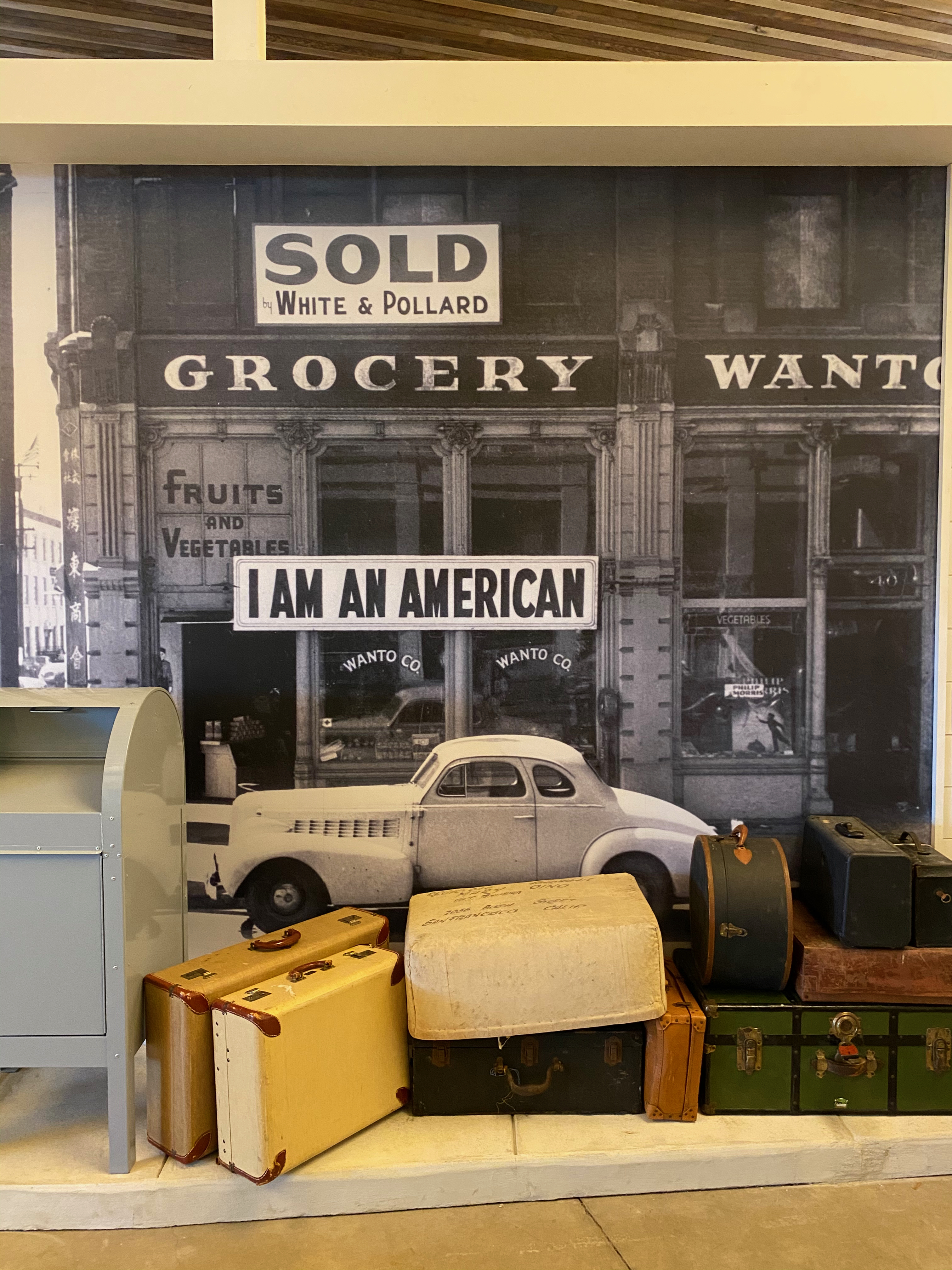
DISLOCATION & DIVERGENCE: The Causes & Consequences of E.O 9066
Explores and illuminates the buildup, implementation and effect of Executive Order 9066 on the Japanese American community.
Features:
- 3-walled installation capturing five episodes of WWII Incarceration: War Clouds Brewing, America Enters the War, Exclusion & Removal, Hidden Truths, Hidden Treasures
- Interactive iPad Pro technology to dive deeper into the analysis of what happened and why
- Mock-up horse-stall barrack, camp map & interactive kiosk for records search
Funded in part by the Japanese American Confinement Sites (JACS), administered by the National Park Service, California Civil Liberties Public Education Program (CCLPEP) and the JA Community Foundation with matching contributions from our donors.
ONLY THE OAKS REMAIN: The Story of Tuna Canyon Detention Station
The untold story of one of the Department of Justice Detention camps (near Pasadena, CA) that held "enemy alien" Issei right after Pearl Harbor.
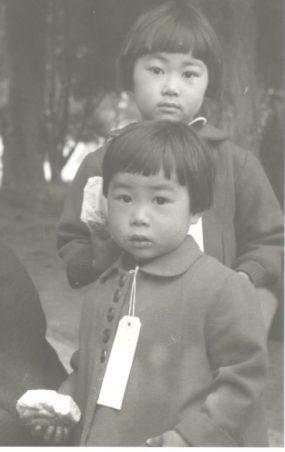
ARTISTS' EYES: Art of Incarceration / CHILDREN OF THE CAMPS
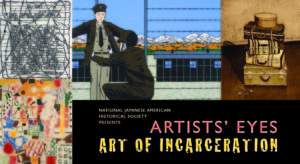
Co-curated by Betty Nobue Kano and Judy Shintani, this multigenerational visual art exhibition reveals the consequences of Executive Order 9066 during World War II and its impact on Japanese Americans.
Mounted at two sites, the exhibition presents a successive unearthing of emotions through four generations. New works by Japanese American and other artists reveal the profound loss and eventual reclamation of their history and identity.
Funded in part by the San Francisco Arts Commission. Public Programming supported by a generous grant from the Grants for the Arts and the Henri and Tomoye Takahashi Charitable Foundation.
SOMETHING FROM NOTHING
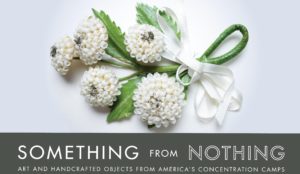
This exhibition and programming is a collaboration between National Japanese American Historical Society, Thacher Gallery at University San Francisco and a culmination of work by the Museum Studies & Art Departments.
Programs open to the public featured poetry, memoirs and performances by camp survivors and presenters. Participants included Brian Komei Dempster, Florence Ohmura Dobashi, Sato Hashizume, Barbara Horiuchi, Kazuko Iwahashi, Janice Mirikitani, Jon Osaki, Brynn Saito, Toru Saito, Sumer Seiki, and Harumi Serata. Contemporary works were presented by artists Barbara Horiuchi and Marlene Iyemura.
Events co-sponsored by USF's Asian Pacific American Studies department and the Master of Arts in Asia Pacific Studies program. Funded in part by the California Humanities. Gallery Manager Glori Simmons, Exhibition advisors: Paloma Anoveros, Rosalyn Tonai, Max Nihei, Melissa Ayumi Bailey.
PREJUDICE & PATRIOTISM: Japanese Americans in the Military Intelligence Service
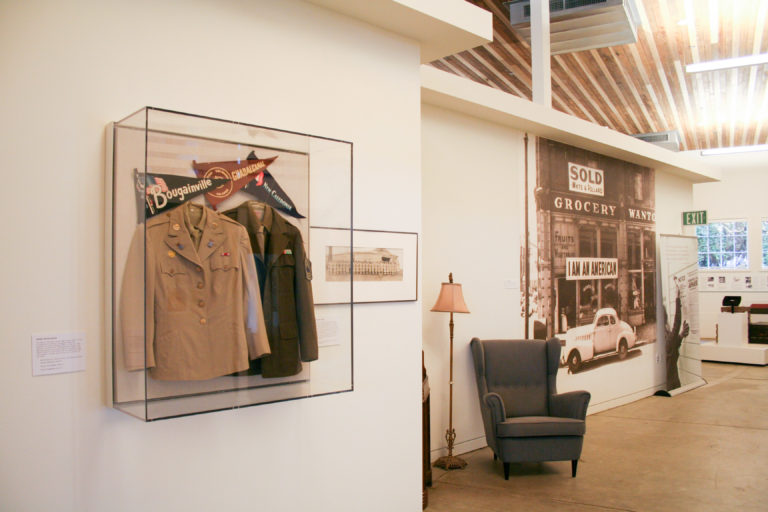
November 1, 2016 marked the 75th anniversary of the first US Army Language School at the Presidio of San Francisco. Against the spectacular backdrop of the Golden Gate Bridge is the Military Intelligence Service Historic Learning Center at Crissy Field in the Presidio of SF.
Within these walls is a permanent exhibit Prejudice & Patriotism: Japanese Americans in the Military Intelligence Service. Supplementing this exhibition is a framed photographic exhibit on the Nisei Soldier in the MIS. Come inside and discover.
Enemy Alien Files: Hidden Stories of WWII
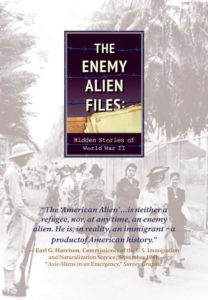
The Enemy Alien Files: Hidden Stories of World War II exhibit presents the experience of Italians, Germans and Japanese immigrants in the US and from Latin America during WWII. It explores the treatment of over 31,000 "enemy aliens" including their exclusion, forced removal, internment, use in prisoner exchanges, and deportation.
Through stunning photographs, oral history quotes, and narrative text, it examines the "enemy alien" experience of surveillance, forced removal, indefinite detention, and deportation, impacting families and communities across two continents. The exhibit reminds us of the fragile nature of our constitutional and human rights in times of international and domestic crisis.
The exhibit consists of 26 banners contained in 13 lightweight retractable banner units designed for easy set-up and storage, available for venues to bring to their communities.
Exhibitions
Japantown Art & Media Workshop 50th Anniversary Exhibit
In 1975, the JAM Workshop introduced an art concept fueled by a generation of artists seeking to use their art for social good. Simply entitled "community art," it welcomed everyone regardless of their ability to pay or their level of skills.
Featuring 56 historic posters from 1976 to 2000, hand-printed using traditional silkscreen methods, visualizing the history of Asian Americans during the final quarter of the 20th Century.
Contested Histories: Preserving and Sharing a Community Collection
During World War II, Japanese Americans incarcerated in America's concentration camps demonstrated their resilience, ingenuity, and creativity. In 2015, JANM was entrusted with the safekeeping of the Eaton Collection, an important collection of some 400 items made by Japanese American incarcerees.
Now the exhibition, enhanced with new findings, is on tour at NJAHS' MIS Historic Learning Center, where many of the recently restored artworks are on view for the first time.
LATENT AUGUST: Legacy of Hiroshima & Nagasaki
As Japanese Americans, born and raised in America, we are positioned to see the atomic bombing from both vantage points. This exhibition brings all these perspectives into view and moves toward a greater understanding of nuclear warfare and its implications today.
TOPAZ COLLAGES: The Art of Jeanie Kashima
Eugenia "Jeanie" Kashima was the first baby born in Topaz (Central Utah) Concentration Camp, on September 22, 1942. Seventy-eight years later during the COVID epidemic, Jeanie revisited her birth via art.
In 2020, Jeanie enlarged family photo images and added them to her mixed media to create these collages, blending historic images with her artistic interpretation.
NOW & THEN: Life in Community Art
An exhibition exploring new works and old favorites of San Francisco Nihonmachi's Community Artists. Our time-honored artists herald their diverse cultural heritage, share their personal and spiritual journeys through life and celebrate a deep sense of community of now and then.
American Bon Odori: Dancing in Joy and Remembrance
Commemorating the 125th anniversary of the Buddhist Churches of America. Vibrant, colorful, and joyous—Obon dancing (Bon odori) is a kaleidoscope of movement and rhythm, deeply rooted in Japanese Buddhist traditions.
Incorporating archival photos, rare pre-war and wartime film clips, and artifacts, chronicling the history and significance of Obon dancing in the continental United States from the 1930s through the 21st century.
The Go For Broke Spirit
This exhibit explores the "untold" histories of the Nisei and Japanese American veterans of World War II and beyond. The series of portraits features veterans dressed in military uniforms similar to those they once donned during the war.
Each portrait captures what it might have been like fighting for a country that imprisoned their family and friends, the racism they endured for looking like the enemy, and their ultimate triumph.
Nihonmachi Street Fair T-Shirts
The look of the Nihonmachi Street Fair from 1974 – 1998 was created by local community artist, Leland Wong. His concepts and vision for each poster design captured what was happening in our community and sometimes in the world.
These beautifully silk-screened posters were also a community effort where many Street Fair volunteers assembled in Leland's garage. Experience almost five decades of street fair history and memories.
Queer Reflections
NJAHS invites visitors to examine how we see and remember. Queer Reflections asks about our memories, perceptions and what we see in ourselves and others.
Two scrolls from Midori's Evoco Project are artifacts of memory. Tina Kashiwagi's "search for mt. fuji" renders abstract what is normally a cliched image of Japanese tourism culture.
Threads of Remembrance
NJAHS is pleased to host Threads of Remembrance; Asian American Quilts of Memory at the NJAHS Peace Gallery. Featuring quilts from the East Bay Nikkei Quilters, Donna Kotake, Jeanie Low and Carolyn Hayashida. Gallery is free and open to the public. Funded by San Francisco Grants for the Arts.
REDRESS, RECKONING & RECOVERY
On the 35th anniversary of the Civil Liberties Act of 1988, a digital exhibit and interactive reflection booth at the MIS Historic Learning Center.
Presented by the National Japanese American Historical Society, funded by a grant from the National Writing Project - National Endowment for the Humanities - A More Perfect Union.
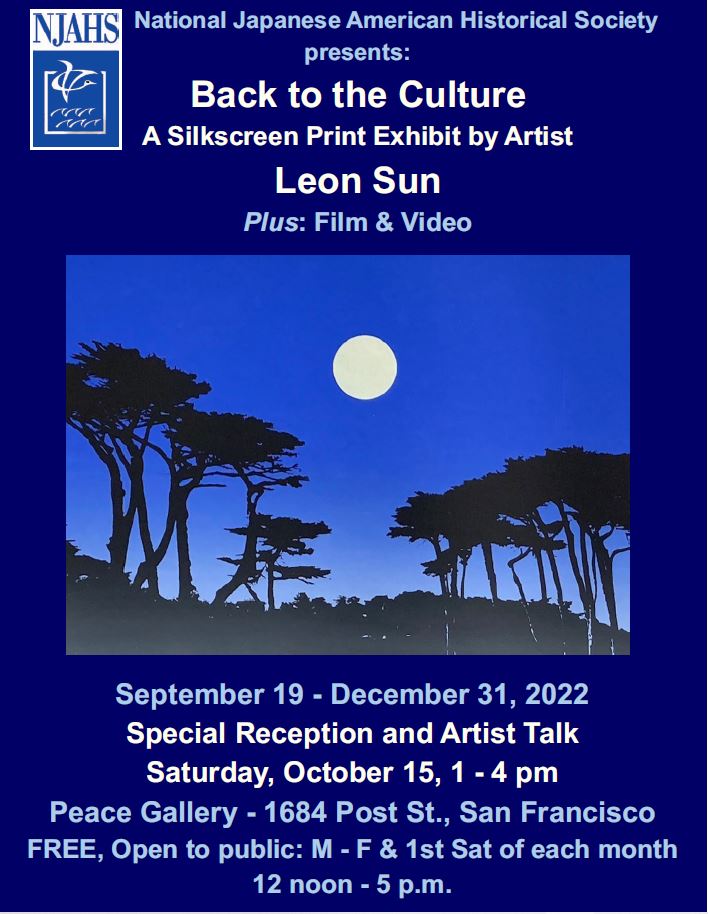
Back to the Culture: A Silkscreen Print Exhibit
We are LGBT Nikkei!
There have always been queer Japanese Americans. Since the earliest days of Japanese migration to the United States, there have been Japanese Americans who defy traditional gender and sexuality. Whether it be the poet Yone Noguchi or 1960s activist Kiyoshi Kuromiya, queer Japanese Americans have been among us.
This exhibition aims to radically give Nikkei space to queer Nikkei, sending a message that LGBTQ Nikkei are welcome and embraced within San Francisco's Japantown community.
Featured Artists: Julia LaChica, Midori, Tina Kashiwagi, Mia Nakano, Tomo Hirai
Oshogatsu Festival Posters
San Francisco's Japantown Art & Media (JAM) Workshop was a community art non-profit organization that operated from 1977 through 1999. Many of JAM's screen-printed posters were devoted to announcing Japanese community events, which included the annual Oshogatsu Festival.
Mochi is shown in many of these posters as it symbolizes the wish for a long life during Oshogatsu. Over the years as the Asian Zodiac cycles, a new animal is used as the primary theme. These colorful and bold screen-printed works of art express the innovative individual styles of their creators.
THE SUITCASE PROJECT
What would you pack if forcibly removed from your home today?
The Suitcase Project is a multimedia exhibition asking yonsei and gosei (fourth and fifth generation) Japanese Canadians and Americans what they would pack if uprooted from their homes in a moment's notice. Kayla Isomura's work examines how descendants of the internment and incarceration remain affected by this history today.
More than 80 subjects ranging in age and background share their stories from cities in British Columbia, Canada and Washington, US through a series of photographs, short films and interviews.
DISLOCATION & DIVERGENCE: The Causes & Consequences of E.O 9066
Explores and illuminates the buildup, implementation and effect of Executive Order 9066 on the Japanese American community.
Features:
- 3-walled installation capturing five episodes of WWII Incarceration: War Clouds Brewing, America Enters the War, Exclusion & Removal, Hidden Truths, Hidden Treasures
- Interactive iPad Pro technology to dive deeper into the analysis of what happened and why
- Mock-up horse-stall barrack, camp map & interactive kiosk for records search
Funded in part by the Japanese American Confinement Sites (JACS), administered by the National Park Service, California Civil Liberties Public Education Program (CCLPEP) and the JA Community Foundation with matching contributions from our donors.
ONLY THE OAKS REMAIN: The Story of Tuna Canyon Detention Station
The untold story of one of the Department of Justice Detention camps (near Pasadena, CA) that held "enemy alien" Issei right after Pearl Harbor.
ARTISTS' EYES: Art of Incarceration / CHILDREN OF THE CAMPS
Co-curated by Betty Nobue Kano and Judy Shintani, this multigenerational visual art exhibition reveals the consequences of Executive Order 9066 during World War II and its impact on Japanese Americans.
Mounted at two sites, the exhibition presents a successive unearthing of emotions through four generations. New works by Japanese American and other artists reveal the profound loss and eventual reclamation of their history and identity.
Funded in part by the San Francisco Arts Commission. Public Programming supported by a generous grant from the Grants for the Arts and the Henri and Tomoye Takahashi Charitable Foundation.
SOMETHING FROM NOTHING
This exhibition and programming is a collaboration between National Japanese American Historical Society, Thacher Gallery at University San Francisco and a culmination of work by the Museum Studies & Art Departments.
Programs open to the public featured poetry, memoirs and performances by camp survivors and presenters. Participants included Brian Komei Dempster, Florence Ohmura Dobashi, Sato Hashizume, Barbara Horiuchi, Kazuko Iwahashi, Janice Mirikitani, Jon Osaki, Brynn Saito, Toru Saito, Sumer Seiki, and Harumi Serata. Contemporary works were presented by artists Barbara Horiuchi and Marlene Iyemura.
Events co-sponsored by USF's Asian Pacific American Studies department and the Master of Arts in Asia Pacific Studies program. Funded in part by the California Humanities. Gallery Manager Glori Simmons, Exhibition advisors: Paloma Anoveros, Rosalyn Tonai, Max Nihei, Melissa Ayumi Bailey.
PREJUDICE & PATRIOTISM: Japanese Americans in the Military Intelligence Service
November 1, 2016 marked the 75th anniversary of the first US Army Language School at the Presidio of San Francisco. Against the spectacular backdrop of the Golden Gate Bridge is the Military Intelligence Service Historic Learning Center at Crissy Field in the Presidio of SF.
Within these walls is a permanent exhibit Prejudice & Patriotism: Japanese Americans in the Military Intelligence Service. Supplementing this exhibition is a framed photographic exhibit on the Nisei Soldier in the MIS. Come inside and discover.
Enemy Alien Files: Hidden Stories of WWII
The Enemy Alien Files: Hidden Stories of World War II exhibit presents the experience of Italians, Germans and Japanese immigrants in the US and from Latin America during WWII. It explores the treatment of over 31,000 "enemy aliens" including their exclusion, forced removal, internment, use in prisoner exchanges, and deportation.
Through stunning photographs, oral history quotes, and narrative text, it examines the "enemy alien" experience of surveillance, forced removal, indefinite detention, and deportation, impacting families and communities across two continents. The exhibit reminds us of the fragile nature of our constitutional and human rights in times of international and domestic crisis.
The exhibit consists of 26 banners contained in 13 lightweight retractable banner units designed for easy set-up and storage, available for venues to bring to their communities.